Predictive Maintenance with LoRaWAN: How Honeywell Makes Industrial Equipment Smart



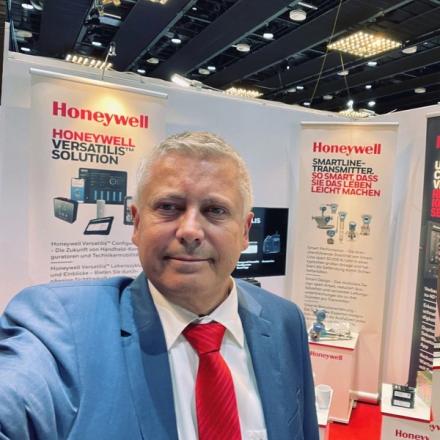

In Episode 191 of the IoT Use Case Podcast, host Ing. Madeleine Mickeleit talks with Martin Kühne, Business Development Manager DACH at Honeywell. The discussion centers on real-world industrial IoT projects focused on Condition Monitoring and Predictive Maintenance. At the core are Honeywell’s LoRaWAN sensors, which monitor pumps, fans, and other rotating equipment to prevent failures and make maintenance predictable.
Episode 191 at a glance (and click):
Summary
Predictive Maintenance with LoRaWAN in Practice
Unplanned downtime of pumps, fans, and motors costs time and money. Martin Kühne explains how Honeywell uses robust LoRaWAN sensors to measure vibration, acoustics, and temperature—detecting anomalies at an early stage. This enables continuous monitoring, targeted maintenance planning, and compliance with safety standards.
The solution integrates seamlessly into existing environments. Data flows via gateways and MQTT into customer systems or existing LoRaWAN networks. Real-world examples range from ventilation systems at Mercedes-Benz production sites to kerosene pumps connected to Frankfurt Airport, where condition-based maintenance optimizes replacement cycles and reduces costs.
Honeywell brings decades of experience from process control technology, ensuring full industrial readiness with IP67 protection, Ex-certified versions, and NAMUR-compliant testing. Scaling is supported by partners who cover the full chain—from sensor deployment to IT/OT integration. For operators of rotating equipment aiming to improve production quality and workplace safety, this episode offers a clear roadmap for adopting condition-based maintenance with IoT. Tune in to learn how monitoring, data integration, and maintenance workflows come together in practice.
Transcript
Hello, dear friends of IoT. Today’s episode is all about hands-on practice, with real IoT projects and concrete implementations. Joining us is Honeywell — 97,000 employees worldwide across 79 countries. What exactly Honeywell is doing with IoT, you’ll find out in this episode. We’ll talk about real-world use cases, including one with Mercedes-Benz, focusing on roof-mounted ventilation systems — why they’re used and what savings can be achieved. We’ll also explore a tank storage project involving kerosene pumps for Frankfurt Airport, where we discuss how to determine the right maintenance and replacement intervals. Plus, we’ll touch on a steel plant project, another fascinating example. The technologies in focus today are LoRaWAN and the corresponding field sensors. For that, I’ve invited Martin Kühne, Business Development Manager DACH at Honeywell for sensor solutions. He comes straight from the field and shares his insights from practical implementation. As always, you’ll find all information on implementing this and similar projects at www.iotusecase.com and in the show notes. So, let’s head straight into the podcast studio.
Hi Martin, great to have you on the show. How are you and where am I reaching you right now?
Martin
Hello Madeleine. For once, I’m not traveling. Normally, I’m visiting customers across Germany, Austria, and Switzerland. This week, there’s a “Gastag” in Munich at the end of the week. Unfortunately, I can’t stay for Oktoberfest — I have other appointments afterward. But it’s still going to be exciting; it’s about LoRaWAN in the gas sector, where vibration monitoring also plays a role.
We’re recording on September 23rd, so it’s Oktoberfest season in Munich. Where are you usually based — do you have a fixed location or are you always on the move?
Martin
I’m mostly on the move. But when I’m at home, it’s in Karlsruhe. I’ve lived there all my life and I’m deeply rooted there. Professionally, I travel worldwide — in my previous roles and now for Honeywell in the DACH region. I really enjoy being on-site with customers, tackling topics directly, and providing solutions.
Honeywell’s headquarters are in North Carolina, Honeywell’s headquarters are in North Carolina, but you focus specifically on the DACH region, especially around LoRaWAN and related sensors — is that right?
Martin
Exactly. I’m actually one of the global specialists for LoRaWAN. I’ve helped push this technology forward in Germany, Austria, and Switzerland because I genuinely enjoy the technology. It’s new, it’s being embraced by industry, and it’s developing fast. That’s what makes it exciting. For me, business development isn’t just about sales — it’s about driving the topic forward and raising awareness. That’s also why I really value the collaboration with you.
I’m really glad to have you on today. Everyone knows Honeywell, of course, and I’ve come across your IoT solutions quite a few times. But hearing directly from you about your projects and offerings is super interesting. Maybe you can start by explaining what’s been happening in your market in recent years. You’re one of the world’s largest technology providers with enormous engineering expertise. Why do you put such a strong focus on IoT and digital solutions? What sparked that shift?
Martin
The main reason is predictive maintenance.
The topic is becoming more and more important. People want to know what is happening with the equipment, when a failure is about to occur, and when they need to react. That way, you can save costs. Laying cables is particularly expensive in industrial plants. If I use wired sensors, I need to run signal cables, which is very time-consuming and costly. With LoRaWAN, I can avoid that. You no longer need to lay cables — sensors can be placed flexibly, integrated easily, and the data can be accessed via the cloud.
Before we dive into the business case and the reasons your customers invest, one more question: You just mentioned the term “equipment.” Do you focus on specific types of equipment with your LoRaWAN sensors? Who are your typical customers?
Martin
Our target group includes all companies that use pumps, fans, motors, or gearboxes — basically any rotating equipment. I actually tested the sensors first on my coffee machine. When the grinder started, I could hear and measure the vibrations. That nicely shows that anything that rotates or vibrates is relevant for our sensors.
So your sensors mainly focus on capturing process data such as vibration, probably within a certain range. Are there any other relevant parameters you measure?
Martin
Yes. We also measure acoustics — the sensor can actually hear. We record surface temperature, which is very valuable for pumps. If the temperature rises, something is running hot, lubrication is no longer sufficient, oil is missing in the bearings. We also measure ambient temperature and humidity. That’s more of a nice-to-have, not always essential. The key factors are vibrations in the X, Y, and Z axes.
From these, we can use diagrams such as FFT to analyze what’s happening with the pump.
[06:26] Challenges, potentials and status quo – This is what the use case looks like in practice
What was the project about with the roof-mounted fans at Mercedes-Benz?
Martin
That was at a Mercedes-Benz plant for parts production. The hall is ventilated from above, with fans on the roof — on the fifth or sixth floor — blowing air into the hall. Air quality must remain constant, which is why these large halls have high-speed doors that open and close quickly so that air doesn’t exchange when a forklift drives in. If ventilation fails, production stops because the quality standards for the parts can no longer be met. We measured the rotation and the noise of the fans. This allows you to see immediately from the office when something changes because the fans normally run continuously. We were on-site with a larger team, went up onto the roof, and could already hear the fan rattling. It was almost about to break apart. The maintenance manager was shocked that no one had noticed. When a fan like that fails, production stops — and that causes huge costs. Apparently, no one had been up there for about three months to check. That’s exactly where we help. The responsible teams can sit in the office, have a cup of coffee, and immediately see when something is wrong. When the indicator turns red, they know: something’s off with that unit — I need to go.
We often hear that from our community too. Unplanned downtime is a big issue — whether it’s bearings, pumps, or fans. Equipment often fails without any early warning. Were you able to determine the cause in the Mercedes case? I assume you didn’t have the data yet at that point and only came in later with your sensors to set up the system and start collecting data, right?
Martin
Exactly — You have to distinguish between different cases. For a pump, we can use an ISO standard to check whether it’s running or not. For rotating equipment, it’s about detecting anomalies. If something changes — for example, if noises get louder or vibrations increase — it indicates a problem. I like to explain it with a simple example. I drive about 40,000 kilometers a year. If something starts rattling at the back of my car, I immediately know that sound doesn’t belong there. Then I go to the garage and have it checked. That’s exactly how our sensors work. The customer receives a notification that something is unusual with a fan and can check it before a failure occurs.
So the business case is about preventing downtime and making maintenance more efficient.
If ventilation fails, the system stops — and that costs money.
That was the main point in this project. Then there’s your second example, the kerosene tank farm.
Is that a similar use case or a completely different one? What was the challenge there?
Martin
It’s actually quite a different use case. At a tank farm near Raunheim, kerosene is delivered by ship and stored temporarily. From there, it’s pumped through two large pipelines to Frankfurt Airport. We’re talking about two massive pumps — you can imagine how much kerosene is needed every day. There’s another tank farm at the airport itself, with seventeen huge tanks that store the kerosene for about a week.
In this process, two main pumps are in operation, and there’s a third one as a backup. That one is regularly overhauled and then rotated into use. So far, this replacement has been purely time-based. Overhauling one of these pumps costs between 100,000 and 150,000 euros because they’re very large and complex. This scheduled rotation happens regardless of the actual condition.
With our sensors, we can now monitor the real condition and say: “The pump is still fine after a year — you don’t need to replace it yet.” This allows the replacement cycle to be extended. Or, if we detect early signs of change, we can say: “Attention, the pump is no longer in good condition — you’ll need to replace it soon.” That prevents failures and saves costs. If a pump fails unexpectedly, the kerosene has to be transported to the airport by truck, which is expensive and time-consuming. So we enable both extended service life and early failure detection.
I can imagine that many listeners have similar use cases. Feel free to comment and share which use cases you’re working on — and whether you’re also dealing with maintenance or condition monitoring.
Today, companies handle these things in very different ways. Some still do it manually — climbing onto rooftops or checking systems on-site. When you look at the technical implementation, what do you typically see with your customers? How do they monitor their equipment before switching to your solution? Do they use Bluetooth, for example? What challenges do you observe?
Martin
Yes, there are still methods that are almost outdated today. There’s a public video where a colleague walks through a plant and says she can smell whether gas is leaking somewhere. She touches a pump to feel if it’s still vibrating and running properly. That’s clearly old-fashioned.
Bluetooth is sometimes used, but it’s always a one-to-one connection — just a temporary measurement. We clearly focus on LoRaWAN. With it, I can connect multiple sensors via a single gateway and get continuous, 24/7 monitoring. That means I’m always tracking the data, not just once a year or through occasional manual checks. That’s the big advantage. If I take a measurement today, close the door behind me, and a pump stops working shortly after, I’d never know without continuous monitoring.
Absolutely. I want to highlight how many companies still do it today and where potential is being lost. Why does this approach cost customers unnecessary money when they could use smarter solutions? I’m thinking of things like device parameterization or scaling when connecting thousands of devices. Where do you see current technologies reaching their limits — and what’s no longer best practice in your view?
Martin
If I have to manually check all these points, I simply need more staff. Sensors can automate that. For example, one customer used to measure vibrations manually. They identified 1,000 measurement points that were hard to access. That also raised safety concerns, since employees had to set up ladders, climb up, and take one-handed measurements. With our sensors, that’s no longer necessary. The data is captured automatically and viewed centrally.
I think a major mindset shift is happening. Skilled workers are in short supply, and these measurements require expertise — you need to know exactly where to measure to detect problems. All of that costs time and money.
Why did you specifically choose LoRaWAN for these projects? What were the main decision factors?
Martin
Exactly — the main reasons are what I mentioned earlier: protecting and ensuring the safety of employees. When you have tens of thousands of pumps like in Ludwigshafen, you want to monitor them reliably — that’s predictive maintenance. Our vision is that the sensor itself will soon be able to detect what’s wrong with a pump. If, for instance, a bearing is broken, the system automatically checks in SAP whether a spare part is available. If it is, it sends a message to maintenance: pick up the part and replace it on that pump. That’s the vision, and I believe it will already be reality by 2026.
[15:45] Solutions, offerings and services – A look at the technologies used
So, let’s talk specifically about your LoRaWAN sensors. You have a complete set of sensors that collect this data, plus a transmitter that sends it at defined intervals via the LoRaWAN network — is that correct? Can you explain how it works in detail?
Martin
Yes. I started working on this topic about two and a half years ago and realized that we can’t just sell sensors — we also need to support customers who don’t yet have a LoRaWAN network. That’s why we collaborate with solution partners. Together, we can cover the entire chain — from the sensor to the gateway, the LoRaWAN network server, and finally the integration of data into higher-level systems.
If a customer already operates a LoRaWAN network, they only need our sensor. LoRaWAN is an open system, and there’s a standardized payload description that makes integration straightforward. The customer can easily connect the sensor and process the data on their own. If the customer doesn’t have a LoRaWAN network — like in the tank farm project — we provide a full solution: we collect data via gateways with a range of up to three to four kilometers and offer an interface, typically MQTT, so the data can flow directly into the customer’s system.
So you’re also integrating your LoRaWAN sensors into existing MQTT environments. If a customer doesn’t have a LoRaWAN setup or uses another technology, you work with your solution partners to support them in building the infrastructure.
Martin
You also have to remember that Honeywell comes from the world of process control technology. That means we can integrate the data not only into our own systems but also into third-party platforms.
You mentioned anomaly detection and analysis earlier. In IoT projects, not all data is sent directly to the cloud — some processing happens locally. How much intelligence is built into your sensors? What is processed directly on-site, and what’s analyzed centrally?
Martin
Our sensor is an intelligent device designed specifically for pumps. It doesn’t require complex computational models or artificial intelligence, nor does it need to be trained. We’ve implemented the ISO 10816-3 standard — which everyone in the pump and vibration field knows — directly into the sensor. Once you provide the pump data, even for older machines, the sensor can immediately determine whether it’s operating correctly. It uses a simple traffic-light system: green, yellow, or red. That means we can instantly see if there’s an issue. There’s no need for a learning phase or reference data from a new, fault-free pump. The sensor can be deployed directly on existing equipment and deliver condition assessments right away.
I’m just looking at your website. The sensors are called Versatilis Transmitters, right? I’ll include the link in the show notes. They’re those small grey devices. How big are they approximately?
Martin
I’m actually holding one right now. It’s smaller than a soda can.
Check it out — I’ll link it in the show notes.
You mentioned earlier that you can also connect the data to SAP. So if the system detects a defect, in theory the sensor could check whether the spare part is available in SAP and automatically send a message to the maintenance team. How do you handle that? Does it also run through your solution partners, or how does the interface between OT and IT work?
Martin
At the moment, this is still part of our vision. The sensor is currently being developed in that direction. That’s why I said we might still need a small hardware adjustment by 2026. But you can clearly see that the industry is changing, especially in the chemical and process sectors. Companies are rethinking how to connect systems and gain real value from their data. We were at the MEORGA MSR trade fair in Ludwigshafen last week — it’s a small but very industry-focused and specialized event. and many of them approached us because they see the potential in this direction and the tangible benefits it brings.
Very interesting. Are there any best practices from these kinds of projects? For example, how do you determine the right time to replace a pump? The business case is clear, but the actual process usually lies with the customer. How do you define the timing together in a partnership?
Martin
Well, I always say — the timing is always wrong if you don’t already have sensors installed. Without continuous monitoring, you simply can’t detect issues early enough. We had a customer who was testing our devices — he wanted to evaluate the concept — and right during that period, a pump without a sensor failed. If our sensor had been installed there, we would have seen the failure coming. So the point is: it’s always too late to start thinking about it after the damage has already happened.
And once the sensors are installed — let’s say I’ve set up the system via MQTT and LoRaWAN — how do you determine the optimal time for replacement? Do you work together with your solution partners and customers on that? You have deep technical expertise in your sensors and know their limits. Do you actively contribute that knowledge, or does the customer handle it entirely on their own?
Martin
Yes, of course, we bring that knowledge to the table. However, large companies often have their own vibration specialists who can analyze frequency bands and identify exactly where a problem lies. When they see certain peaks, they know whether it’s an inner or outer bearing, if it’s been lubricated incorrectly, or if another component is affected. These are real experts on-site. Still, we also provide software that supports these analyses. For many customers, though, the simple traffic-light logic of our sensor — green, yellow, red — is sufficient. When the indicator turns red, they know it’s time to go on-site and investigate what’s happening.
[22:32] Transferability, scaling and next steps – Here’s how you can use this use case
Are there any best practices from your projects where you’d say companies should really pay attention — whether in implementation or technically? Are there things where companies still waste money today, even though it could be done more easily?
Martin
Well, “spending money” always sounds good, but in principle best practice applies everywhere something rotates and where a failure means downtime or high cost. If a pump fails and production stops, or a component becomes unusable because it was no longer formed correctly, the damage is huge. Once you’ve experienced a single such incident, you realize how quickly sensors pay off. If I can prevent even one of those failures, I can easily justify buying a hundred sensors.
And they pay off immediately. So the key is to focus on the critical use cases — the places in the process where money is really lost. That’s where such a solution delivers quick ROI.
Thank you, Martin, for these great insights and for letting us take a look at some of your projects. I’ll link everything in the show notes, including the projects already featured on our platform. And finally — what can we expect from you in the future? Both in terms of projects and from Honeywell in general. Anything new you can already share?
Martin
I can definitely give you a sneak peek. You should know that Honeywell develops these sensors entirely in-house — partly in Switzerland, partly in India. So we manufacture them ourselves, which makes them truly industrial-grade. Our sensors come with all Ex certifications worldwide, full approvals, and IP67 protection. Our sensor for the chemical industry is NAMUR-certified, similar to a TÜV approval. Major chemical companies have access to these test reports and can see exactly how well our sensor has been validated and how precisely it performs.
We have a long development roadmap. One new product already finished is a methane sensor — it detects methane leaks. That’s particularly relevant right now because the EU has introduced new emissions regulations for methane reduction. Gas network operators must regularly monitor for leaks. Since gas distribution stations are often several kilometers apart, LoRaWAN is perfect for this. It enables reliable data transmission and immediate leak detection.
Next on our roadmap is an inline pressure sensor with LoRaWAN connectivity. I already have it in test operation. It’s scheduled for release at the end of this year and can measure up to 375 bar. A major chemical plant plans to use it to monitor its water, steam, and pressure pipelines — measuring inlet and outlet conditions, temperature, and pressure. Producing pressure and heat consumes a lot of energy. If you can reduce either by just a few bars or degrees at certain points, you save significant production costs.
If someone listening thinks they have similar use cases — can they simply get in touch with you to exchange ideas? Should I link your contact in the show notes?
Martin
Absolutely. My standard line at the end of every presentation is: There’s a solution for everything — and it’s called Martin Kühne.
Perfect. You can find Martin Kühne on LinkedIn and in the show notes. Take a look! Martin, thanks so much for joining today. It was great to discuss your concrete projects and offerings — it really shows the value you bring and how customers implement your solutions. The final word goes to you.
Martin
Thank you, Madeleine. I really enjoyed it. I love talking about our LoRaWAN sensors, because every customer conversation brings new ideas. There are always new use cases — from filter shakers to applications nobody had thought of before. Once customers understand what our sensor can do, they immediately see where it fits. Then it’s time for implementation, for getting in touch with me — and off we go.
And with that, I wish you all a great rest of the week. Take care.
Martin
Bye.
Bye.