
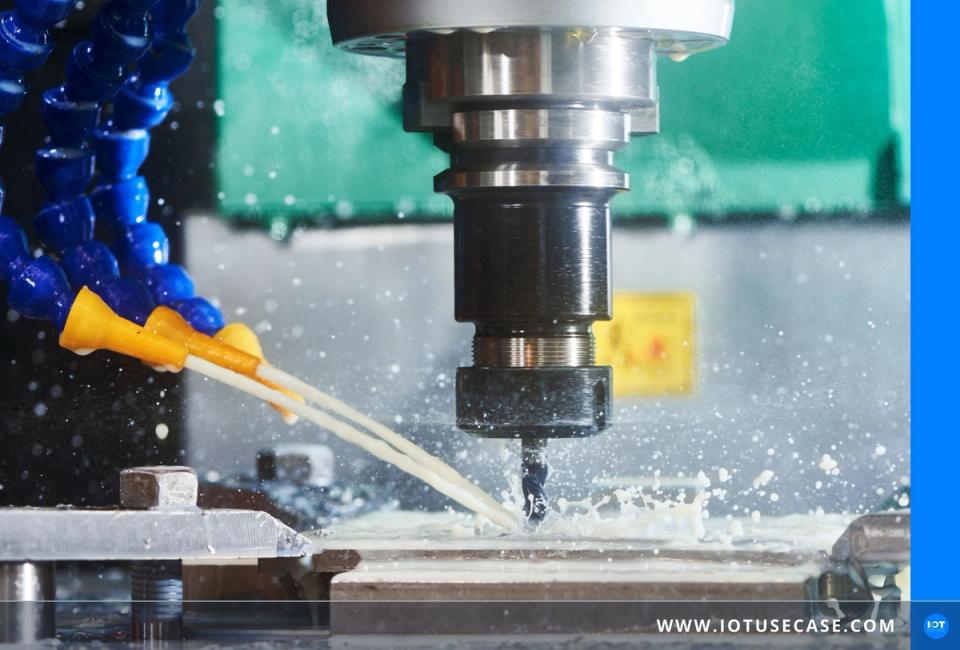



Energy consumption, utilization and cycle times are key machine KPIs. With an industrial IoT solution they can be monitored without interfering with existing systems. Using industry-grade IT and IoT components creates an end-to-end data infrastructure that integrates seamlessly into existing production environments and unlocks new potential for efficiency, sustainability and maintenance planning.
An expert in this field is Perinet GmbH, which implements a consistent infrastructure from the field level to IT (including cloud environments) based on industry standards. This allows for direct, smart, and secure integration of sensors and actuators with the cloud, the internet, and company IT.
The challenge: information gaps due to missing machine KPIs
Manufacturing companies are under constant pressure to operate their machines more efficiently while reducing energy consumption. However, the right machine KPIs are often missing for well-founded decisions on process optimization. These KPIs can be obtained by collecting data from machines, systems and their control units. But this is not always possible for three reasons:
- Interventions in ongoing processes are prohibited or restricted for safety reasons.
- Access to internal system functions is contractually forbidden by the manufacturers or technically blocked.
- The systems lack IT interfaces that comply with current standards. In many such cases, no public documentation of the technical internals is available either.
Continuous monitoring and analysis of this data is essential to detect anomalies at an early stage, for example unusually high energy consumption, frequent downtimes of individual systems or inefficient cycle times compared to target values.
Manufacturing companies need a practical solution that allows these machine KPIs to be recorded accurately and securely. Together with its partner company Zentinel MDS, Perinet has developed a solution that enables the monitoring and analysis of machine KPIs in record time, without changes to the machine control system or complex system integration.
The challenges at a glance
- Access to machine data often not possible
- Missing interfaces hinder data integration
- Process-relevant machine KPIs remain unused
- Early detection of malfunctions hardly possible without a suitable data basis
The solution: analysis without interfering with existing systems
The software solution from Perinet and Zentinel records energy consumption, utilization and cycle times without modifying existing control systems. It operates independently of the machine architecture and structures operational data for further use. The solution integrates seamlessly into existing production environments and is designed to meet future requirements.
Architecture based on network components and an edge server
The implemented concept combines Single Pair Ethernet (SPE), a network adapter, an edge server and a central dashboard for visualization.
The ZentNode network adapter is designed for the digitalization of industrial production processes. It captures signals from existing or retrofitted sensors, processes them locally and securely transmits them via Single Pair Ethernet (SPE) to IT systems. Its key advantage is its simple implementation. It can be installed on existing machines without modification. In addition, it requires no PLC programming and no complex network configuration.
The ZentEdge server is a robust edge computer that collects, stores and processes machine data in an SQL database. The data is then made available to existing applications via standard IT protocols. ZentEdge uses Single Pair Ethernet (SPE), eliminating the need for complex gateways. It enables the integration of operational technology (OT) into IT networks using HTTPS, MQTT or REST.
Visualization, connectivity and access control
An intuitive dashboard displays machine KPIs both in real time and as historical data. It offers extensive filtering options by time period, machine and metric, as well as multiple visualization types such as line charts, bar charts and heat maps.
It also provides trend analyses, for example comparing the energy consumption of identical machines across different shifts. This allows patterns and deviations to be quickly identified. Automatic notifications can also be configured to alert users when defined thresholds are exceeded. An integrated event log documents all incidents with timestamps and duration, simplifying root cause analysis for downtimes.
The dashboard integrates seamlessly with existing IT systems. Through REST APIs, it transmits data to MES/ERP systems such as SAP S/4HANA, while MQTT enables connectivity to IIoT platforms. A role-based access control system defines which user groups (for example shift supervisors or maintenance staff) can view specific data or send control commands.
Cross-industry applications
The solution can be effectively deployed in many sectors, for example:
- Heavy industry: Monitoring energy-intensive processes such as steel or cement production.
- Logistics: Capturing operating times and energy consumption to minimize idle periods and enable predictive maintenance.
- Food industry: Monitoring temperature- and time-sensitive processes such as pasteurization or cooling.
- Mechanical engineering: Using detailed runtime data for quality assurance and early detection of deviations in serial production.
- Other industries: Applicable in the chemical, plastics or packaging industries for monitoring and documenting production parameters.
The result: transparency and optimization
The Perinet solution demonstrates how the targeted use of IoT technology can make machine processes more transparent and generate meaningful machine KPIs, even under challenging conditions. Its modular structure makes it easy to integrate additional machines or sensors later on without disrupting ongoing operations.
The added value goes far beyond simple data visualization. Continuous analysis of machine KPIs enables focused optimization of energy consumption and reveals potential savings. At the same time, companies can monitor utilization and performance of individual machines, gaining a reliable data foundation for key business decisions.
This new level of transparency simplifies resource planning, improves capacity utilization and promotes a more conscious approach to energy and operating costs. Combined with other digitalization initiatives, it forms a central building block for a future-oriented production strategy that unites technological innovation with operational efficiency.
Summary of results
- Continuous collection of machine data
- Transparent visualization of machine KPIs such as energy consumption and utilization
- Fast integration into existing IT environments
- Reliable data foundation for maintenance, efficiency improvements and ESG reporting